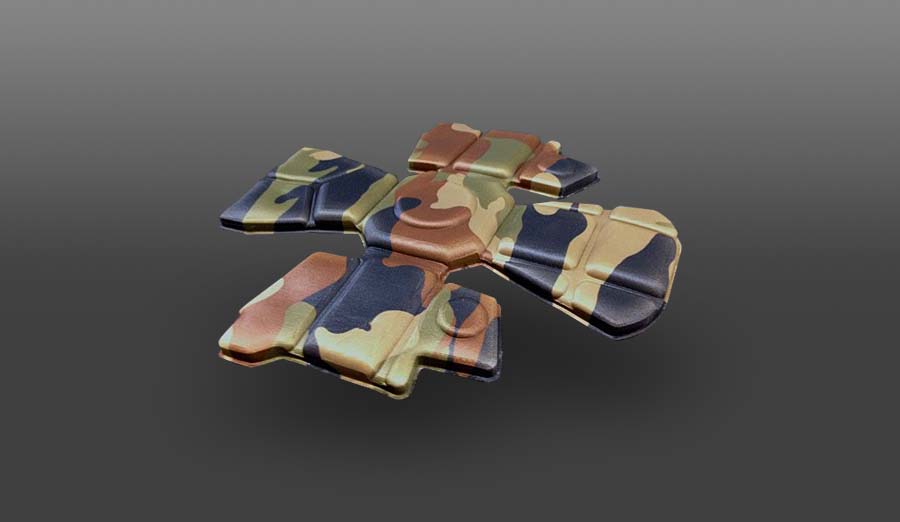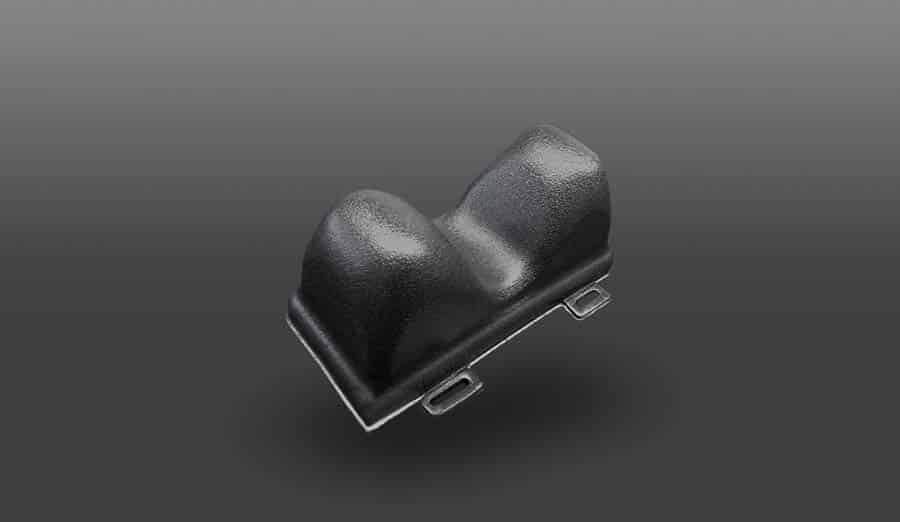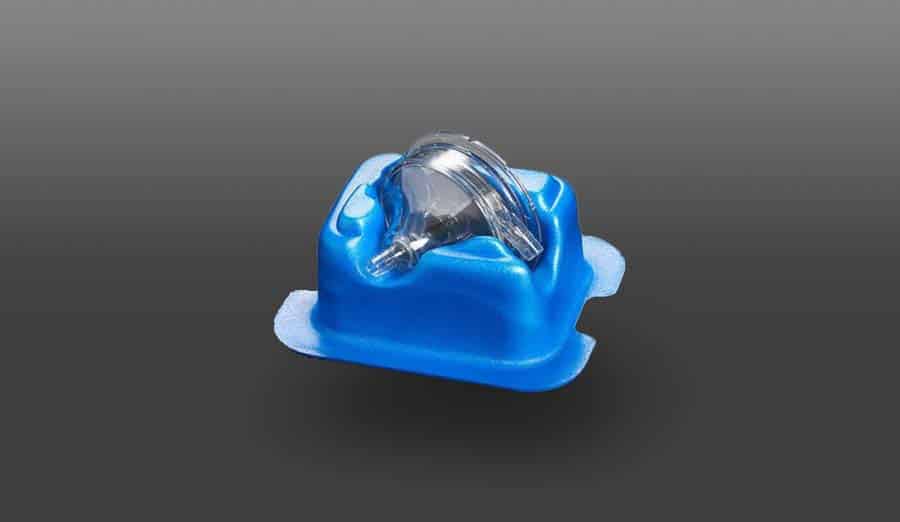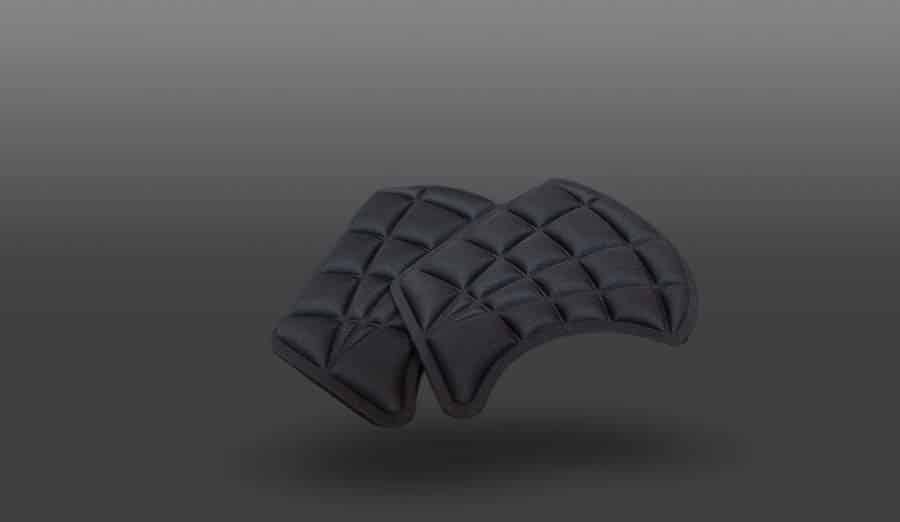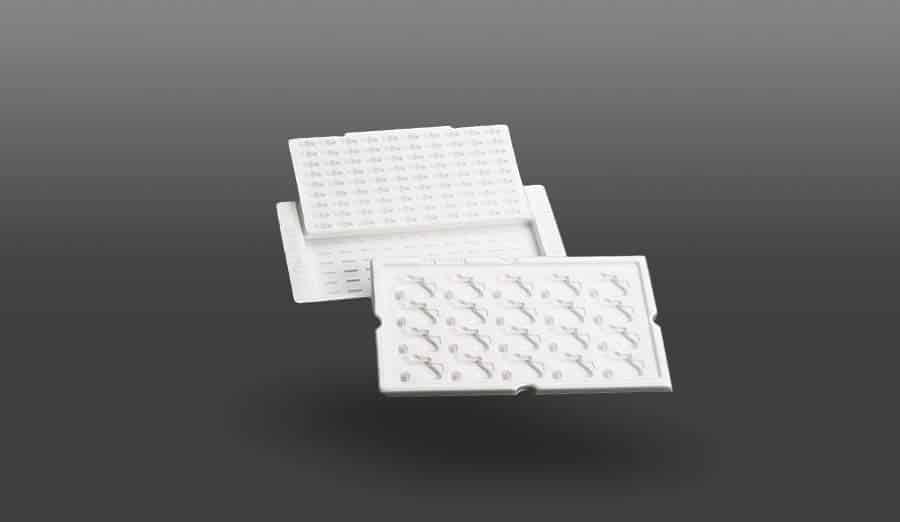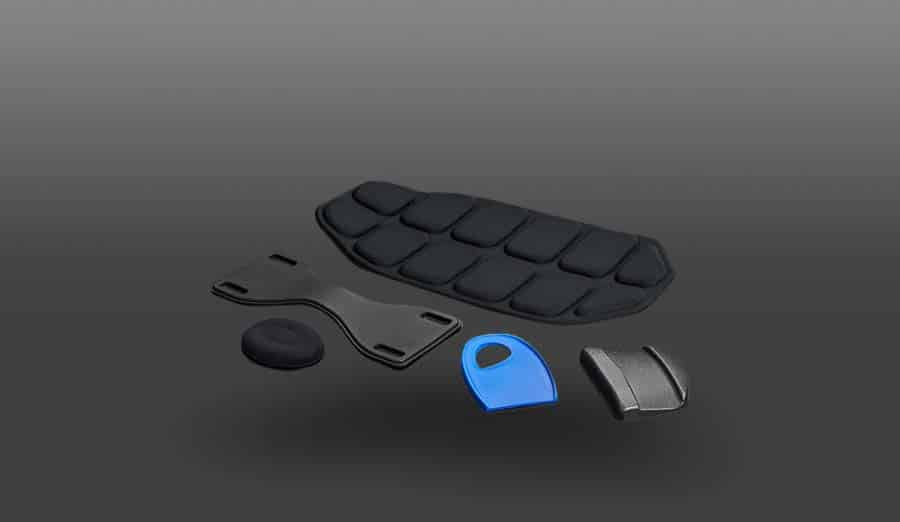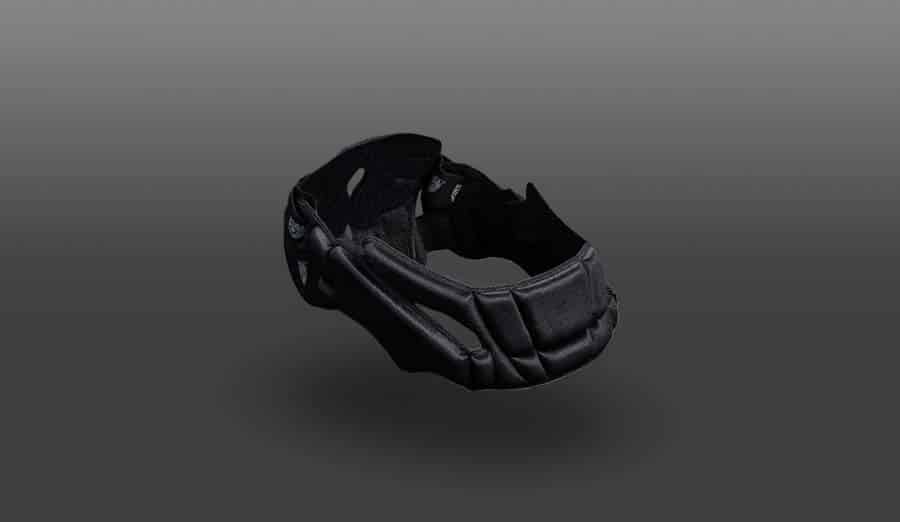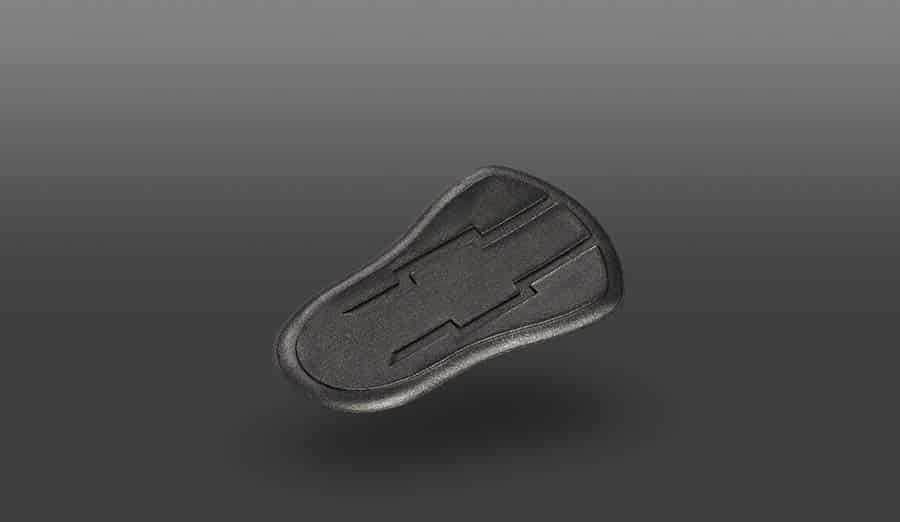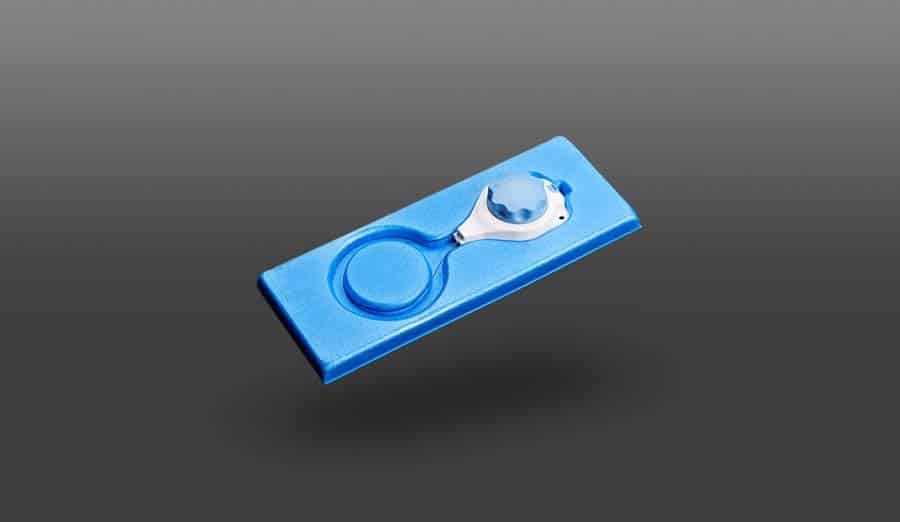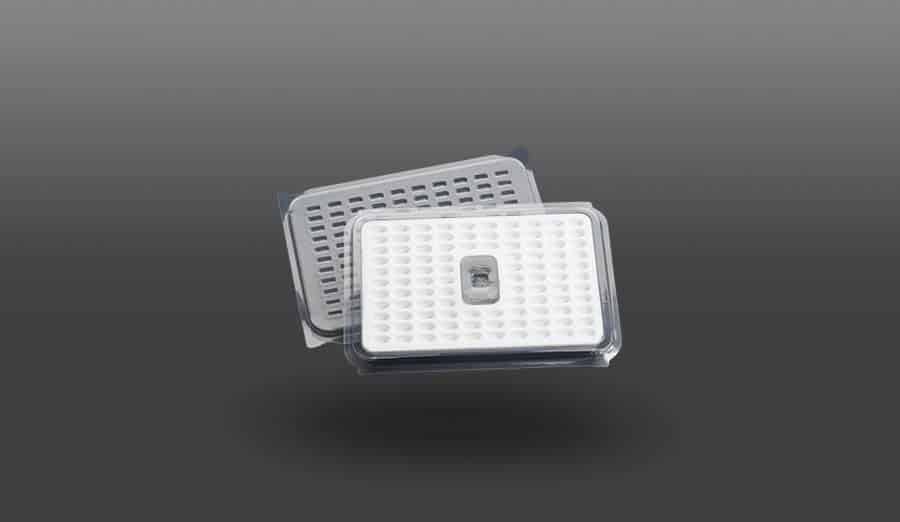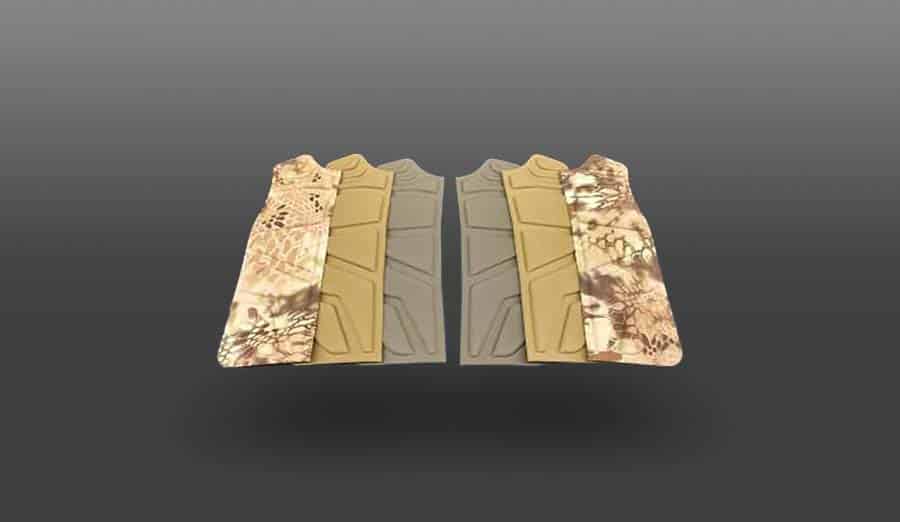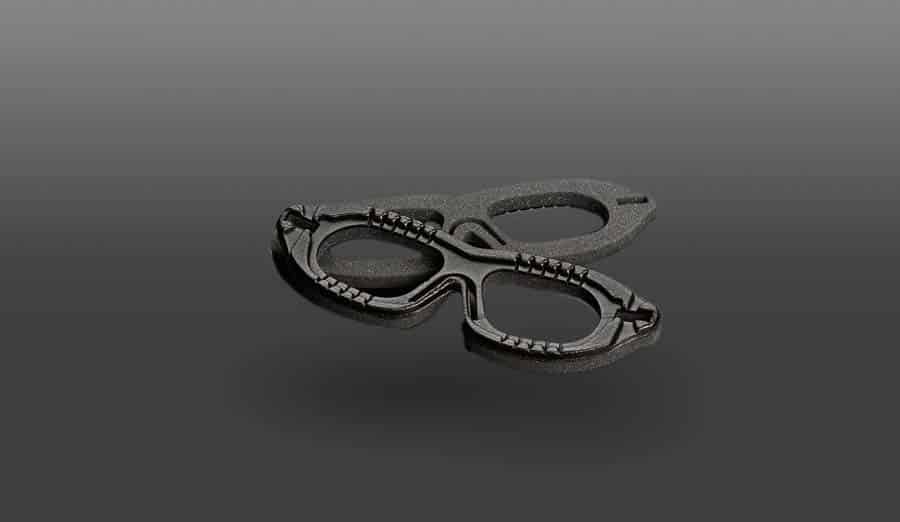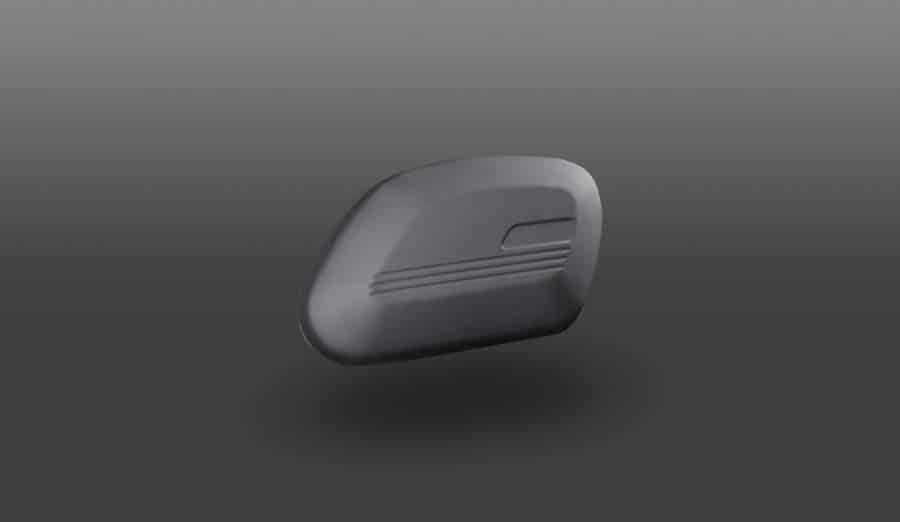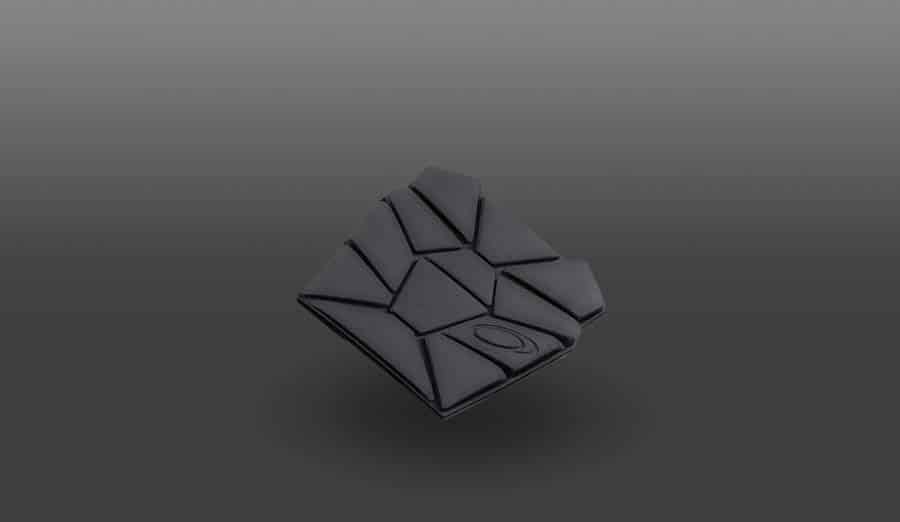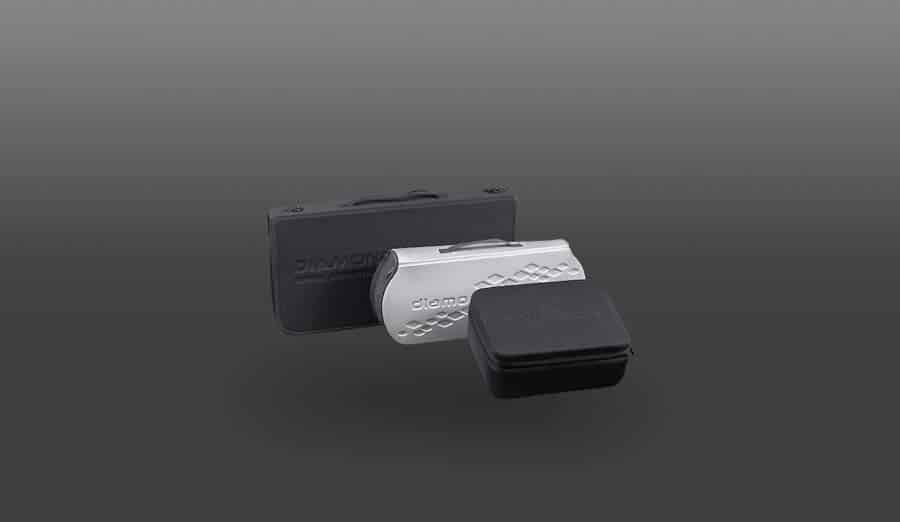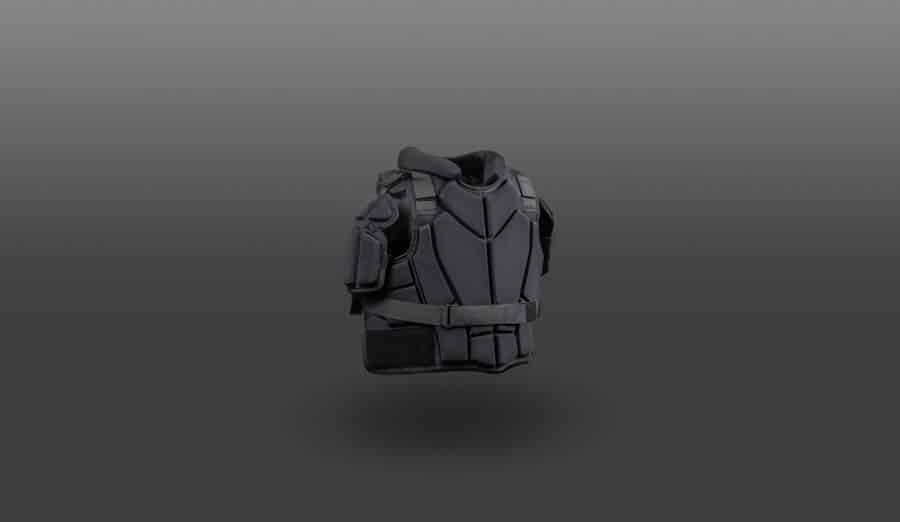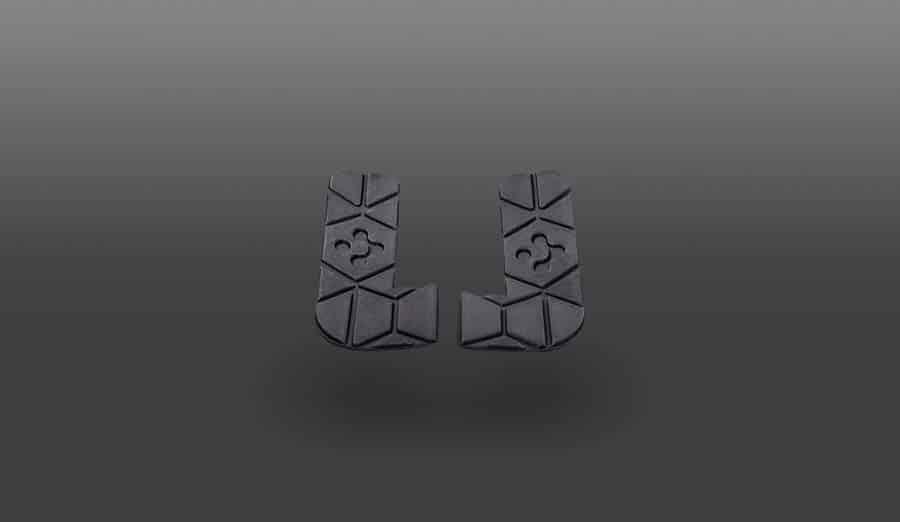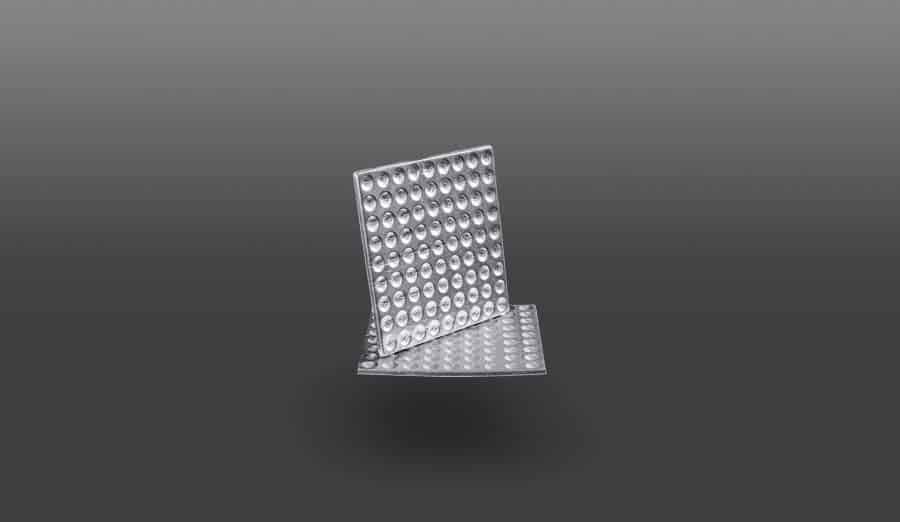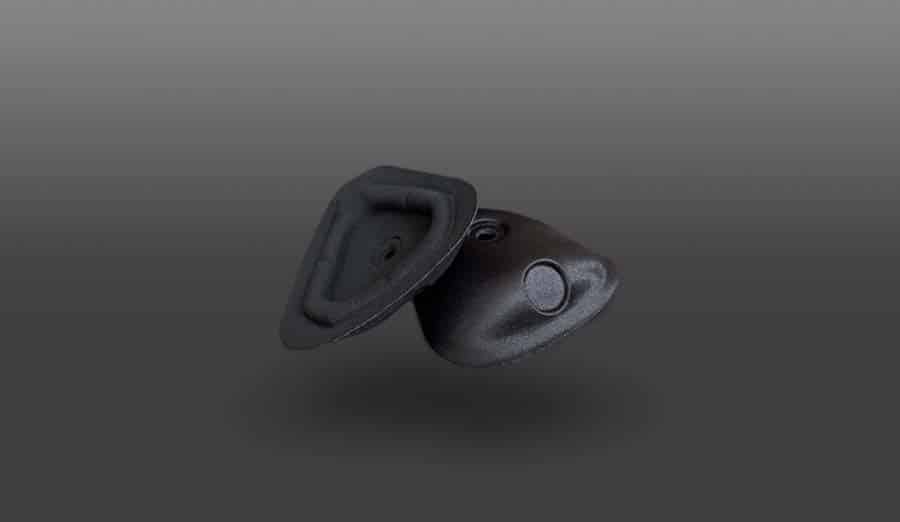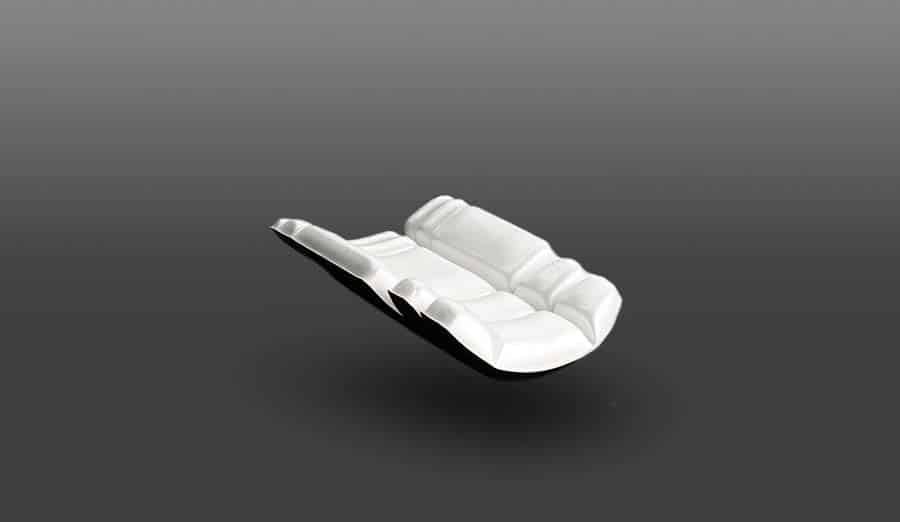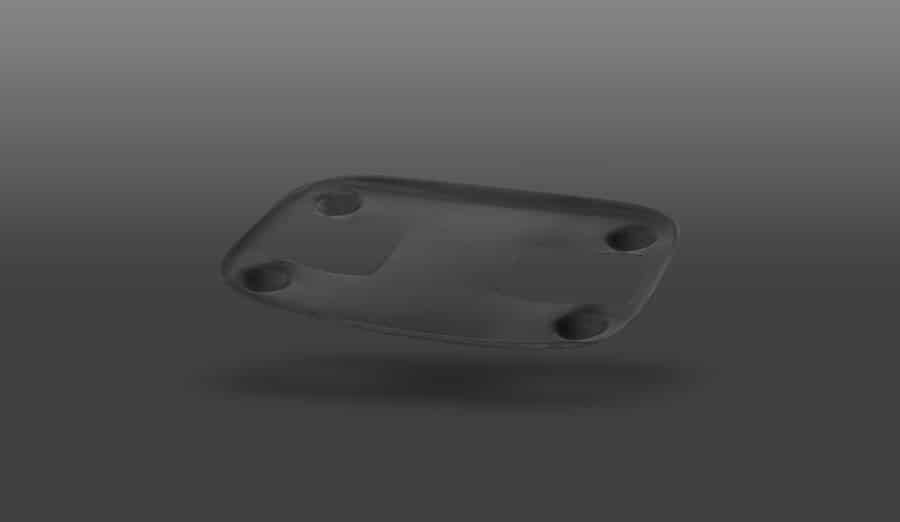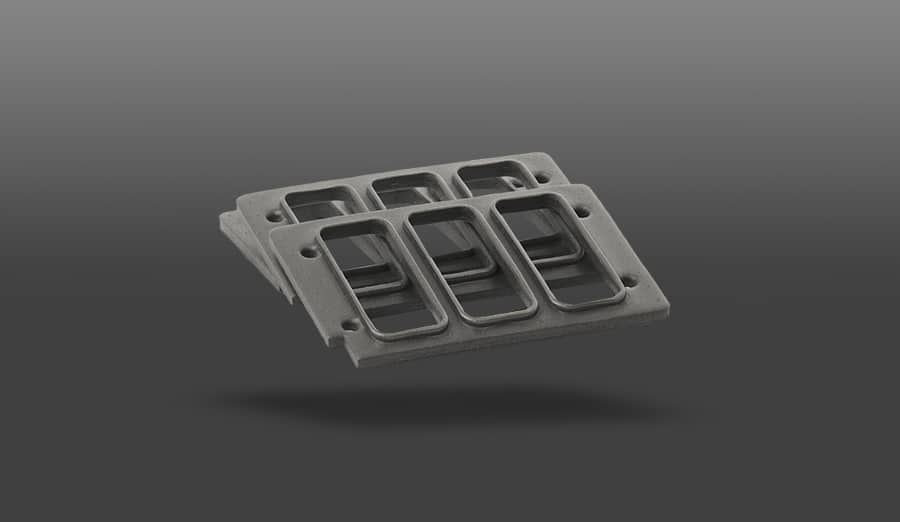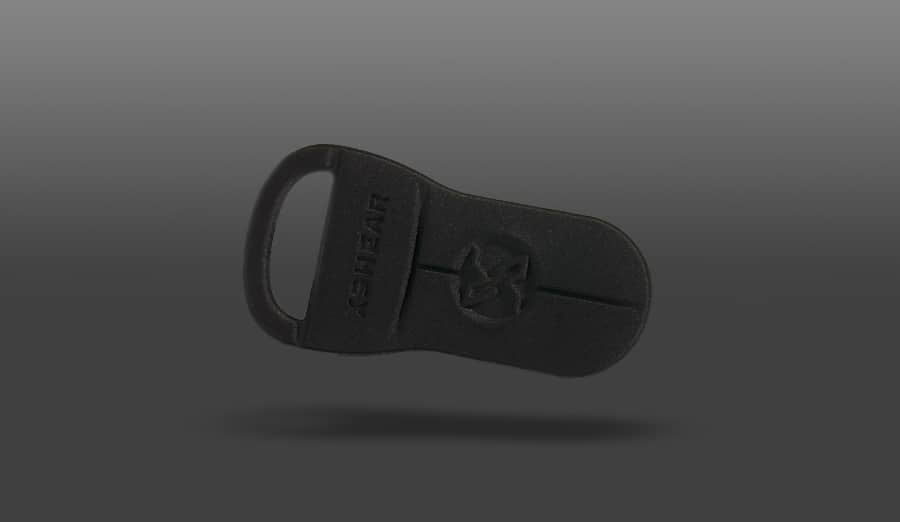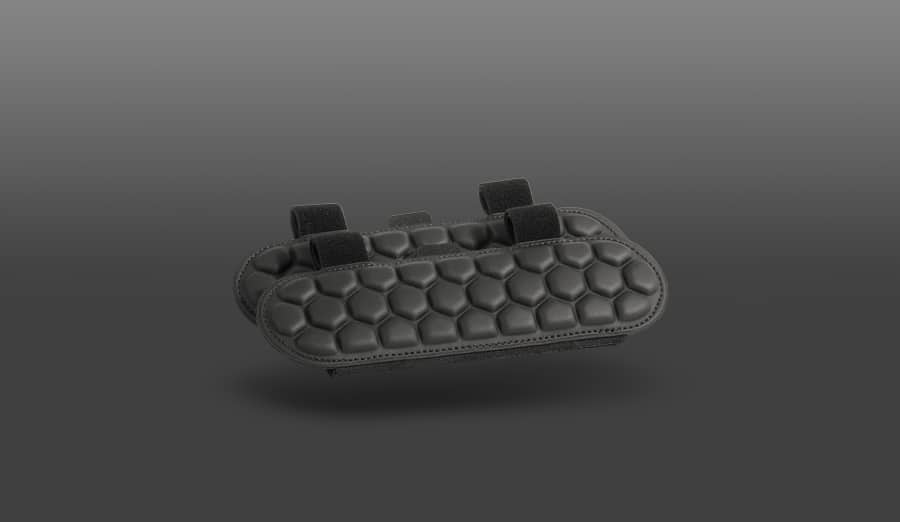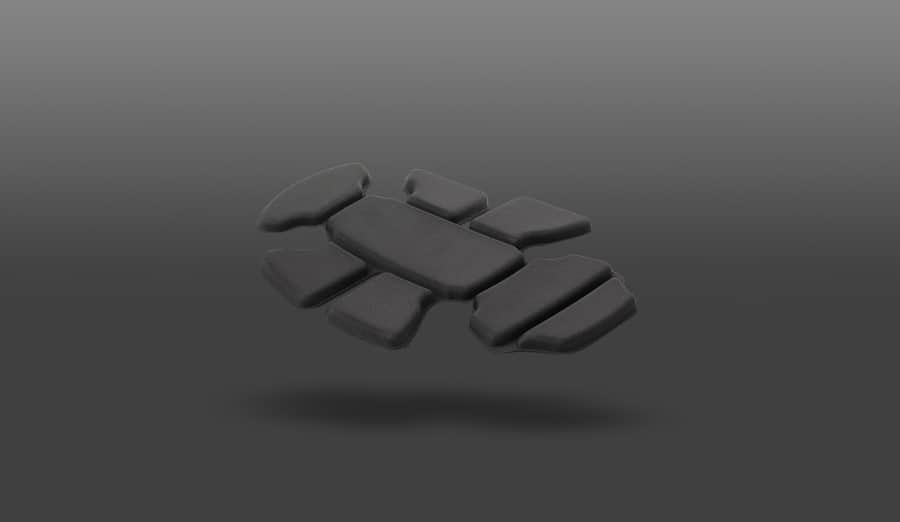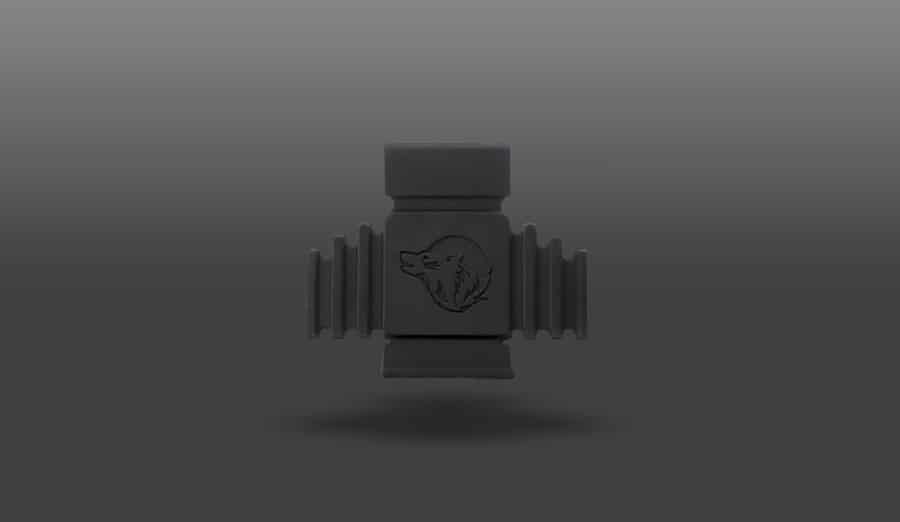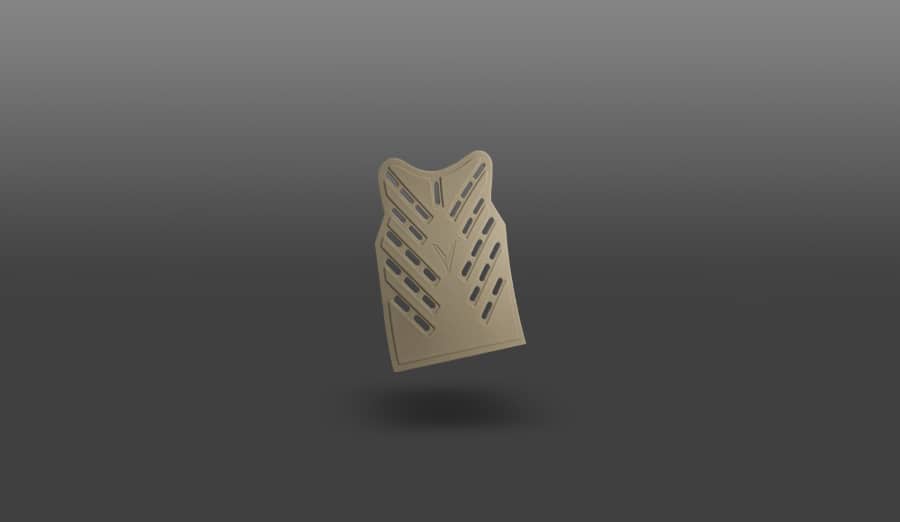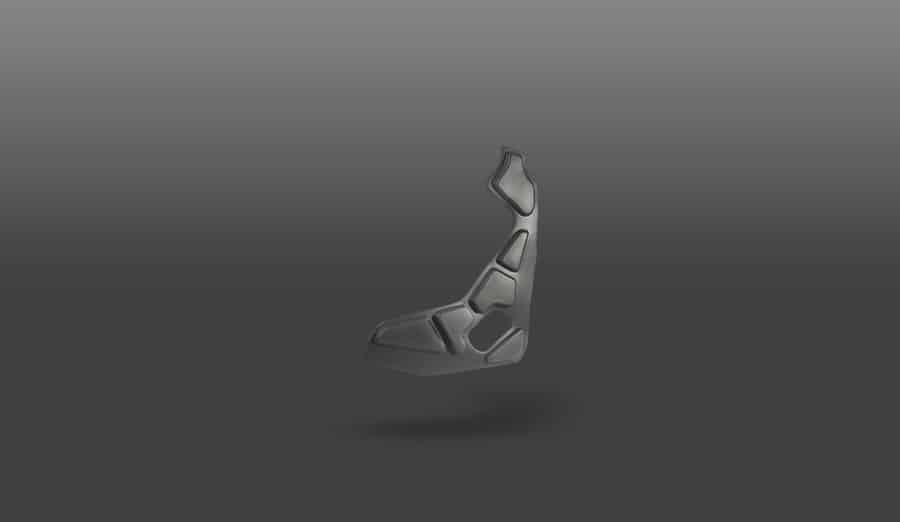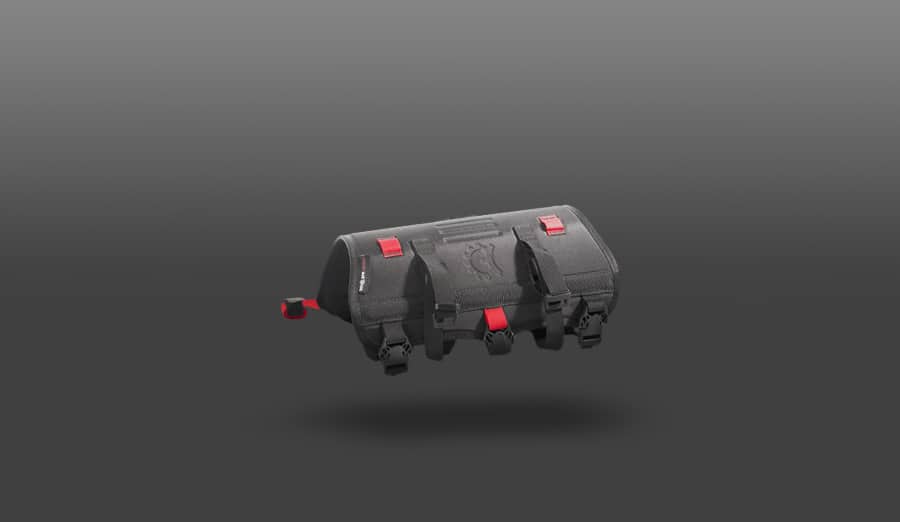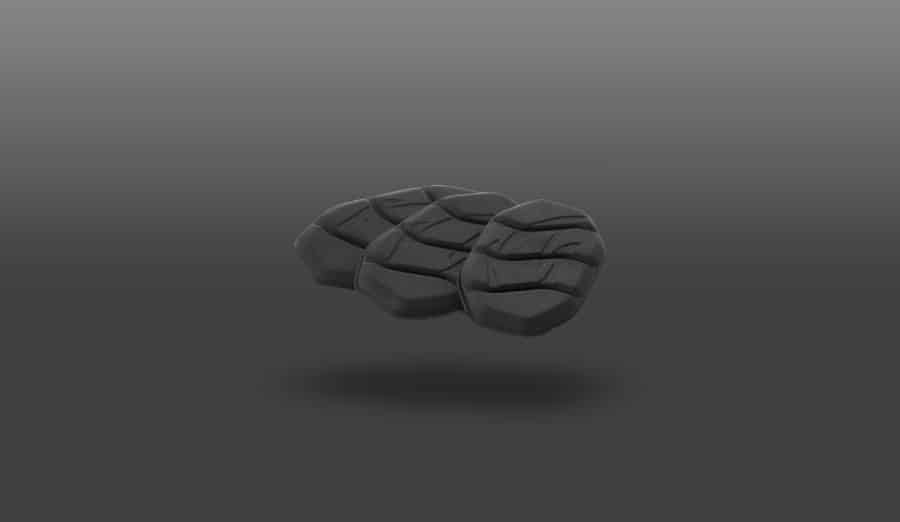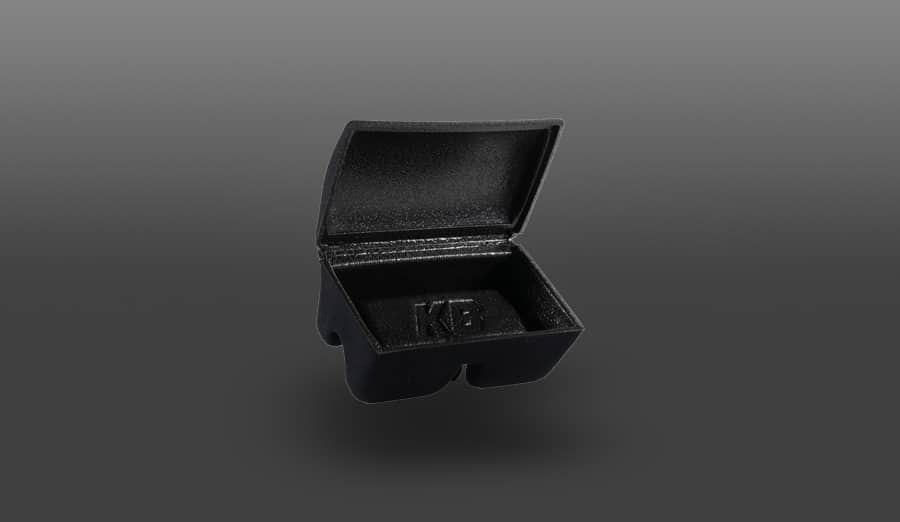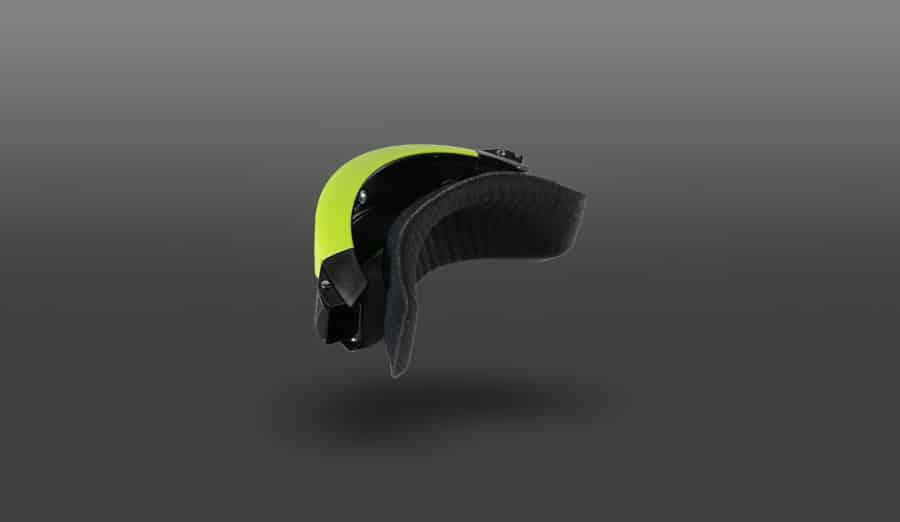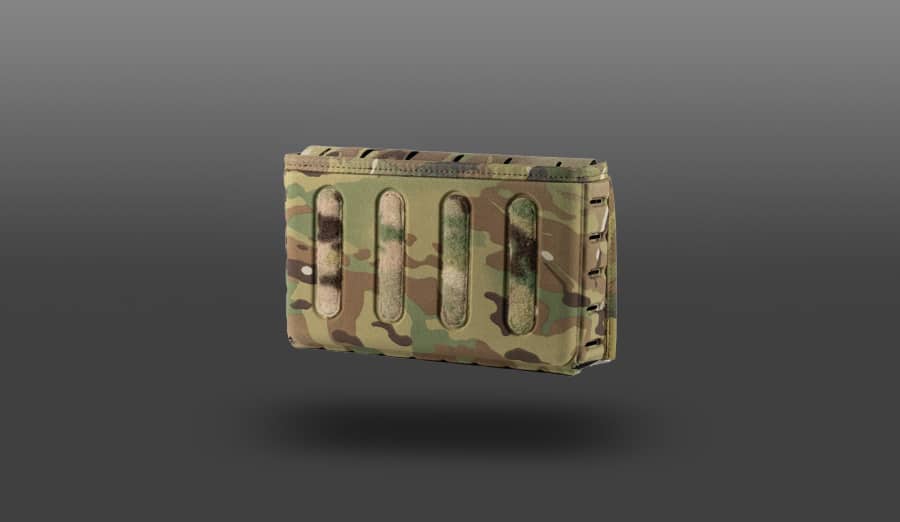

Foam Compression molding is a process utilized for the manufacturing of three-dimensional molded foam and foam composite parts. It is an ideal process for making parts that have intricate features, require very defined part geometry, have varying wall thicknesses, or need to be held to critical dimensional tolerances. At Flextech, we use this manufacturing process to produce custom molded foam components for our customers in the medical, industrial, and personal protection markets.
The foam or foam/fabric composite is heated in an industrial convection oven and then placed in a machined, matched tool which is mounted in a molding press. The mold is then closed using hydraulic pressure. This pressure forces the heated and now pliable material into contact with all of the mold surfaces while the pressure is maintained. Once the material has cooled, the mold is opened and the finished part is removed from the tool. On most parts, we are also able to cut the perimeter and any internal features of the part during the molding process. Cutting features in tandem with the molding process results in a finished part and allows us to avoid the expense of a secondary cutting operation.
We have the ability to compression mold the closed-cell polyolefin family of foams, which includes cross-linked polyethylenes and ethyl vinyl acetate (EVA) foams, as well as open-cell polyurethane foams. We can also mold an extensive range of foam composites. Using our various lamination processes to create composite materials, we can then compression mold the open and closed-cell foam composites. These custom composites can incorporate different types of foams or dual densities of foams, knit and woven fabrics, polyolefin films, pressure-sensitive adhesives, medical-grade coatings, and many other materials. We are also willing to experiment with the lamination and molding of unique materials that our customers provide.
Flextech utilizes our foam compression molding process to manufacture parts for medical, industrial and personal protection markets.
Flextech specializes in compression molding a variety of foams, including closed-cell polyolefin foams such as cross-linked polyethylene and ethylene-vinyl acetate (EVA), as well as some open-cell polyurethane foams. Additionally, we have the capability to mold a wide range of foam composites to meet diverse application needs.
The foam or foam/fabric composite is heated in an industrial convection oven and then placed in a machined, matched tool which is mounted in a hydraulic molding press. The mold is then closed using hydraulic pressure. This pressure forces the heated and now pliable material into contact with all of the mold surfaces while the pressure is maintained. Once the material has cooled, the mold is opened, and the finished part is removed from the tool.
The foam compression molding process can produce lightweight, durable, three-dimensional parts without the expense of injection mold tooling. Foam compression molding is a cost-effective process to manufacture high-performance foam components.
Flextech uses the foam compression molding process to manufacture molded foam components for a variety of industries, including medical, industrial, and personal protection. This process is also commonly used for parts intended for consumer and automotive markets. However, Flextech does not supply parts to those particular sectors.
Yes, foam can be injection molded. However, it is a unique process that requires specialized equipment. Flextech is not equipped to provide injection molded foam components.
Flextech specializes in compression molding a variety of foams, including closed-cell polyolefin foams such as cross-linked polyethylene and ethylene-vinyl acetate (EVA), as well as some open-cell polyurethane foams. Additionally, we have the capability to mold a wide range of foam composites to meet diverse application needs.
The foam or foam/fabric composite is heated in an industrial convection oven and then placed in a machined, matched tool which is mounted in a hydraulic molding press. The mold is then closed using hydraulic pressure. This pressure forces the heated and now pliable material into contact with all of the mold surfaces while the pressure is maintained. Once the material has cooled, the mold is opened, and the finished part is removed from the tool.
The foam compression molding process can produce lightweight, durable, three-dimensional parts without the expense of injection mold tooling. Foam compression molding is a cost-effective process to manufacture high-performance foam components.
Flextech uses the foam compression molding process to manufacture molded foam components for a variety of industries, including medical, industrial, and personal protection. This process is also commonly used for parts intended for consumer and automotive markets. However, Flextech does not supply parts to those particular sectors.
Yes, foam can be injection molded. However, it is a unique process that requires specialized equipment. Flextech is not equipped to provide injection molded foam components.